Print Marketing 2026: Why Print is Thriving and How to Leverage It
Introduction
Will print be dead? Think again!
In 2026, print will not only be alive — it’ll thrive. Despite the digital boom, businesses are rediscovering the power of print marketing as a tactile, trusted, and highly engaging medium. From personalized direct mail to sustainable print marketing, the new wave of print innovation proves that physical media still has a vital role in modern communication.
Today’s consumers crave authenticity, and print delivers just that. In an era of fleeting digital ads, a beautifully printed catalog, brochure, or postcard stands out — literally. It’s tangible, memorable, and, when combined with digital tools like QR codes and AR, becomes even more powerful.
In this guide, we’ll explore why print will be making a major comeback, what print advertising trends are shaping 2026, and how your business can leverage them to boost engagement, brand trust, and ROI.
Why Print Marketing Is Thriving in 2026
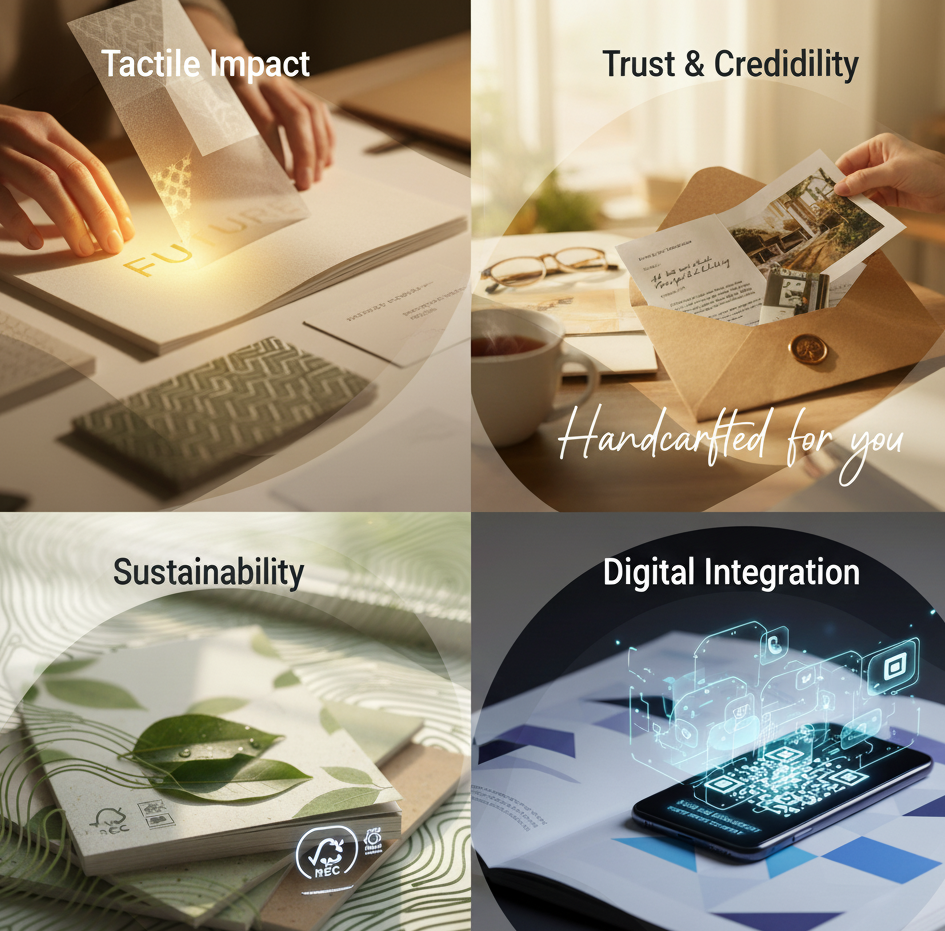
1. The Emotional Impact of Tactile Marketing
Touch is one of the most powerful senses, and print takes full advantage of it. Tactile marketing engages customers on a physical level that screens simply can’t match. When someone holds your brochure or feels the texture of your packaging, they form a deeper emotional connection with your brand — one that lingers far longer than a digital click.
2. Building Trust and Credibility
In an era of misinformation and digital fatigue, print materials hold a higher level of perceived credibility. A personalized direct mail piece feels deliberate and thoughtful — not algorithmic or intrusive. Local businesses in particular benefit from this trust factor, as print reinforces authenticity and community connection.
3. Sustainability Drives Consumer Preference
Far from being wasteful, sustainable print marketing is now leading the way. Eco-conscious consumers are drawn to brands that prioritize recycled paper, soy-based inks, and carbon-neutral printing. In fact, 65% of global consumers say they’re more likely to support companies that use environmentally friendly packaging and materials.
4. Integration with Digital Channels
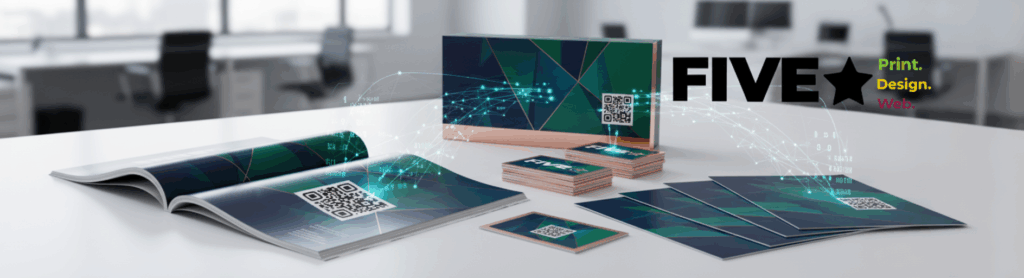
The future of print isn’t analog — it’s integrated print and digital. QR codes, AR (augmented reality), and PURLs (personalized URLs) bridge the gap between print and the web. Studies show that campaigns using both print and digital touchpoints see a 60% higher response rate than digital-only campaigns.
Top Print Marketing Trends for 2026
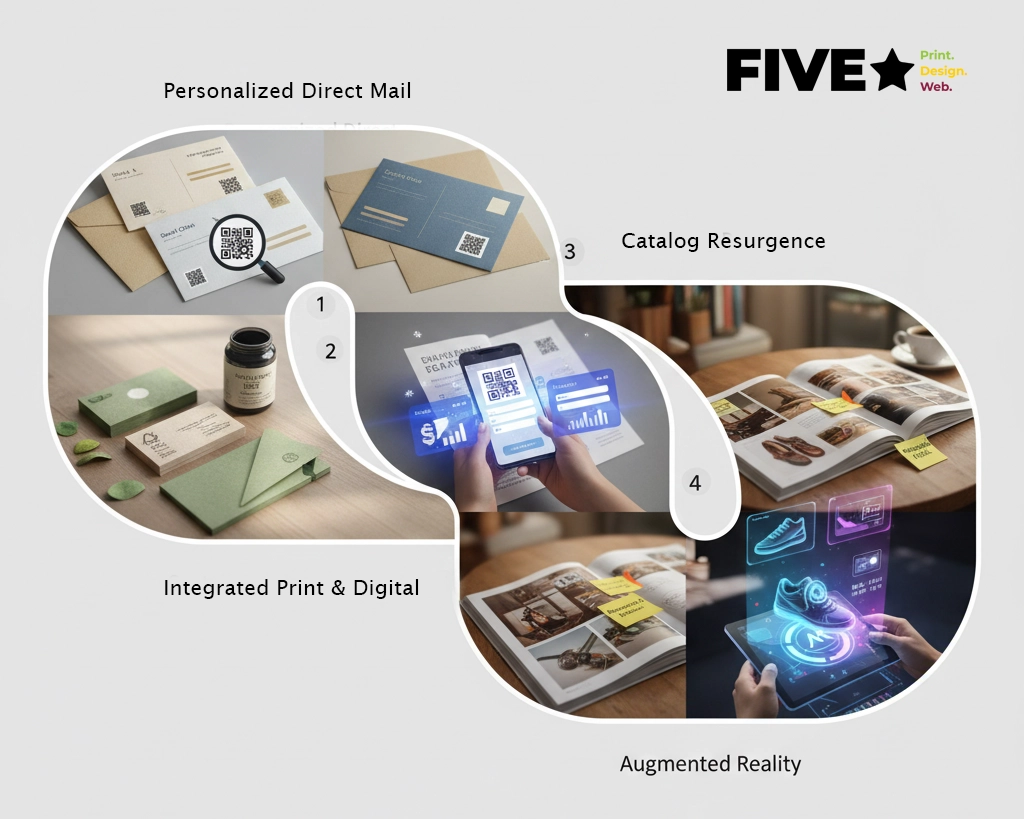
1. Personalized Direct Mail: The New Frontier
Best personalized direct mail 2026 campaigns use variable data printing (VDP) to create hyper-targeted pieces for each recipient. Imagine sending postcards with each customer’s name, purchase history, or a unique discount code.
Use Case: A local café in Wellington sends personalized loyalty cards with QR codes linking to a digital menu or event calendar.
Benefits: Higher open rates, deeper engagement, and measurable ROI.
2. Sustainable Print Marketing: Going Green With Impact
Sustainability is no longer optional — it’s expected. Sustainable print marketing leverages recycled papers, soy-based inks, and eco-friendly processes certified by bodies like FSC or PEFC.
Use Case: A retail brand prints its seasonal catalog on 100% recycled stock and includes a message about its green commitment.
Benefits: Positive brand image, reduced carbon footprint, and long-term customer loyalty.
3. Integrated Print and Digital: The Smart Hybrid
The most effective print advertising trends in 2026 connect offline and online. QR codes, AR visuals, and personalized URLs make printed materials interactive and trackable.
Use Case: Event flyers that allow users to scan and register instantly or posters that display 3D product demos via AR.
Benefits: Better engagement metrics, seamless conversions, and measurable results.
Keywords: QR code print marketing, augmented reality print.
4. The Print Catalog Resurgence
Remember catalogs? They’re back — and stronger than ever. In 2026, printed catalogs will drive strong consumer engagement. Modern brands use VDP to curate product selections for each recipient.
Use Case: An e-commerce fashion label sends personalized mini-catalogs showcasing items based on browsing history.
Benefits: Enhanced brand storytelling and tangible customer experience.
5. Augmented Reality Print: The Immersive Revolution
Augmented reality print transforms static visuals into interactive experiences. By scanning an AR-enabled poster or brochure, customers can explore videos, 3D animations, or product tutorials.
Use Case: A restaurant launches an AR menu that shows dishes being prepared when scanned.
Benefits: Higher engagement, memorable experiences, and viral potential on social media.
Benefits of Print Marketing in 2026
Cost-Effectiveness
With technologies like VDP, print is more efficient than ever. Brands can print exactly what they need — reducing waste and improving campaign performance.
Durability
Unlike digital ads that disappear in seconds, printed materials stick around. Brochures, business cards, and packaging offer long-term exposure and repeated impressions.
Engagement
Tactile marketing fosters stronger emotional bonds. According to recent studies, 71% of consumers expect personalized interactions, and print fulfills that expectation beautifully.
Brand Trust
Tangible print assets reinforce professionalism and reliability. This is especially important for small businesses and local marketers seeking to build loyal communities.
Sustainability
Eco-friendly printing aligns with 2025’s global shift toward conscious consumption. Sustainable print marketing sends a clear message: your brand cares about the planet and its people.
Tips for Leveraging Print Marketing
- Personalize Everything: Use variable data printing to customize text, images, and offers for each recipient.
- Integrate Digital Touchpoints: Add QR codes or AR experiences to link offline engagement to online conversions
- Prioritize Sustainability: Choose eco-friendly print campaigns and highlight your certifications (FSC, Carbon Neutral, etc.).
- Target Local Audiences: Combine personalized direct mail with local community initiatives to strengthen brand relationships.
- Work With Trusted Providers: Partner with an experienced print and marketing company to ensure quality, efficiency, and consistent branding.
Conclusion
As we move through 2025, it’s clear that print isn’t just surviving — it’s evolving. The top print advertising trends like personalized direct mail, augmented reality print, and sustainable print marketing prove that tactile experiences still captivate audiences in a digital world.
Businesses that embrace print marketing in 2026 will benefit from higher engagement, better brand trust, and longer-lasting impact. Whether you’re a local business or a national brand, the key lies in integrating print strategically, creatively, and responsibly.
Looking to elevate your next campaign? Explore how our expert team can help you bring your print and digital marketing together — sustainably and effectively.